
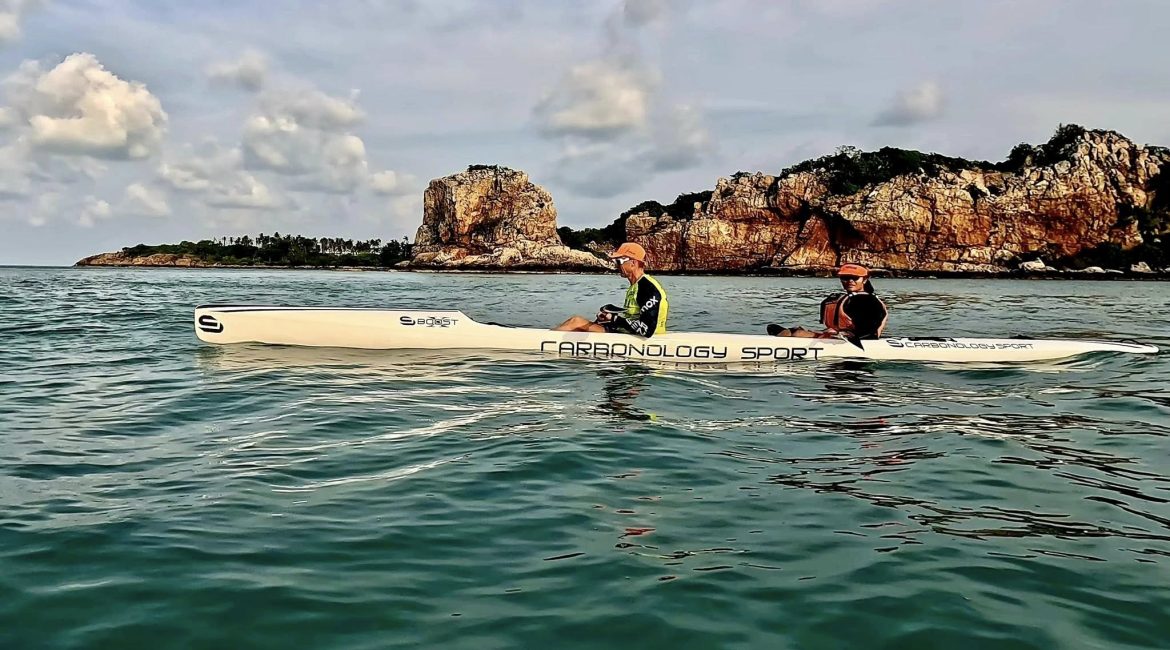
Thailand is globally renowned for its limestone cliffs and emerald lagoons, but a new wave is hitting the Land of Smiles. Beyond the standard tourist longtails and inflatable kayaks lies a high-performance world of speed, fitness, and adrenaline: Surfski Kayaking in Thailand.
If you’ve ever looked at the horizon and wondered how it feels to glide—not just float—across the ocean, this is your entry point.
What is a Surfski? (And Why It’s Not Just a Kayak)
To the uninitiated, it looks like a long, skinny kayak. But a surfski is a different beast entirely. It is a sit-on-top, open-cockpit craft designed for one thing: speed in open water.
While traditional sea kayaking is about touring and storage, paddling in Thailand via surfski is about the “downwind.” It’s the art of catching ocean swells and surfing them for kilometers. Because of the sit-on-top design, it’s safer in big waves; if you fall off, you just climb back on—no “Eskimo roll” required.
Why Thailand is the Next Global Hub for Water Sports
Water sports in Thailand have traditionally centered around diving and kiteboarding. However, the geography of the Gulf of Thailand and the Andaman Sea offers a unique playground for paddlers:
- The “Endless Summer” Factor: Unlike Europe or North America, you don’t need a 5mm wetsuit here. The water is warm year-round, making it the perfect training ground for international athletes during the northern hemisphere’s winter.
- Diverse Conditions: From the technical chops of Phuket and Koh Samui to the flat-water speed sessions in Rayong or Pattaya, there is a “track” for every skill level.
- The Community: The Surfski Kayak Thailand community is small but incredibly welcoming. It’s a mix of ex-pro athletes and weekend warriors who value the post-paddle coconut as much as the workout itself.
Top Spots for Paddling in Thailand
1. The Andaman Coast (Phuket & Krabi)
For those seeking raw beauty. The swells coming in from the Indian Ocean provide genuine downwind opportunities. Navigating between the iconic “karst” islands provides a backdrop that no gym or rowing machine can replicate.
2. The Gulf Coast (Pattaya & Rayong)
Don’t dismiss the Gulf. The wind conditions here are surprisingly consistent. Many of the country’s top paddlers train here because the “fetch” (the distance wind travels over water) creates short, steep bumps that are perfect for honing your surfing technique.
3. Koh Samui & Koh Phangan
The ultimate “paddler’s retreat.” The deep water around these islands allows for long-distance crossings that test your endurance and navigation skills.
How to Get Started: Pro Tips for Beginners
If you’re looking to transition from recreational kayaking to a surfski, keep these three things in mind:
- Stability over Speed: Don’t buy the skinniest “elite” boat on day one. A stable boat allows you to apply power. If you’re wobbling, you aren’t paddling.
- Safety First: The Thai sun is relentless, and the currents can be deceptive. Always wear a PFD (Personal Flotation Device), use a leg leash, and carry a waterproof communication device.
- Learn the “Catch”: Surfskiing is a full-body workout. It’s not about your arms; it’s about your core and leg drive.
The Future of the Sport
The growth of paddling in Thailand is mirrored by the rise of international events. With more rental centers and coaching clinics popping up, the barrier to entry is lower than ever. Whether you are looking for a soul-soothing sunset paddle or a heart-pumping race against the elements, the Thai coastline is calling.